
By Benjamin L. - TheExpert UX/UI Designer at Squad
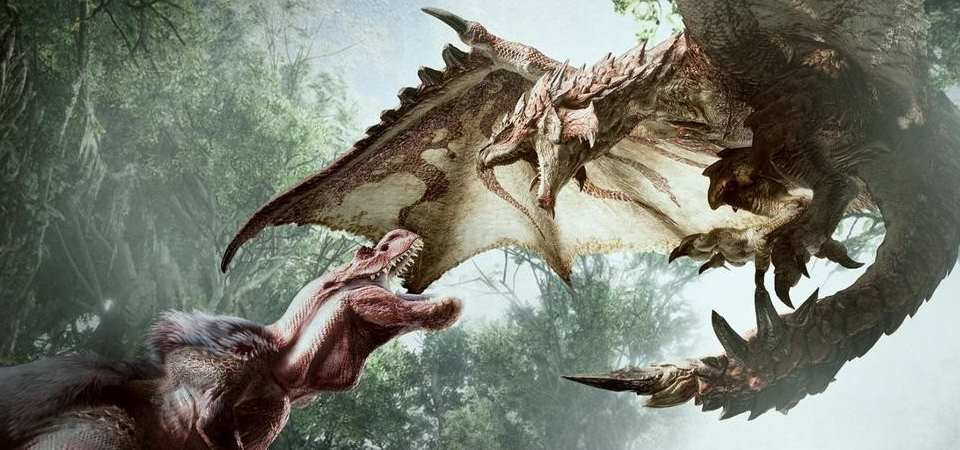
Armor ready, battle plan ready, you're ready to take on a big beast in Monster Hunter. But as you launch your attack, your volley of arrows awakens not one but two large creatures. Confused, each beast thinks the attack is coming from its counterpart. The two beasts then begin to fight each other. All you have to do is watch the show and wait patiently for one of the creatures to prevail over the other before finally joining the fight.
In this scenario, each creature belongs to a system that obeys a certain number of rules. For example:
- If a creature is attacked, it looks for the source of the attack.
- An attacked creature identifies the first entity encountered in "Combat" mode as the origin of the combat.
- An attacked creature enters "Combat" mode when it is attacked.
Thus, using these rules, both creatures entered "Combat" mode following the volley of arrows, and identified each other as the origin of the combat, due to their proximity.
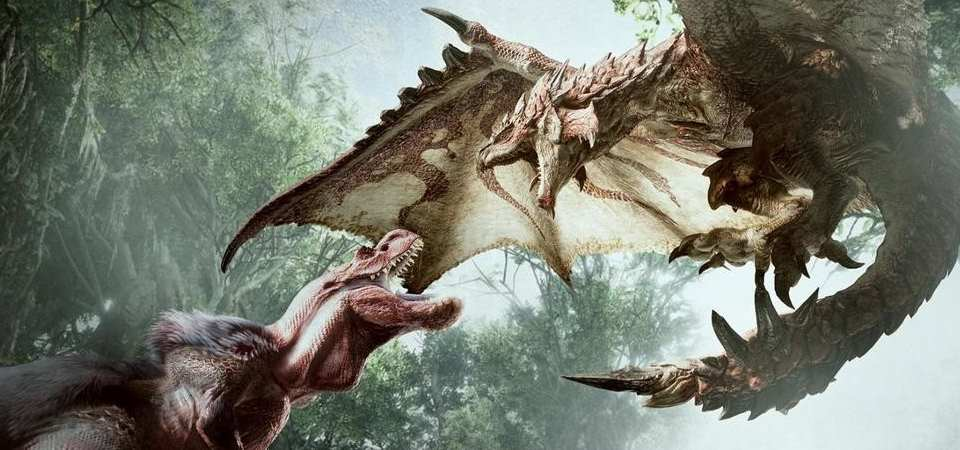
This type of game is called a systemic game. Let's look at some examples of systemic games and how they change the user experience.
A machine for anecdotes
When two systems interact, unexpected situations can arise. These situations were not anticipated by the game designers, but they created an environment that allows for this kind of interaction between different systems.
This leads to many hilarious situations, such as in this video posted by a Watch Dogs 2 player. A man is proposing marriage. The player notices the couple and decides to take a photo of this unique moment. Realizing that he is being photographed, one of the characters strikes a pose, upsetting his partner and ruining the moment. The couple ends up fighting, completely changing the situation, all because of a photo taken by the player.
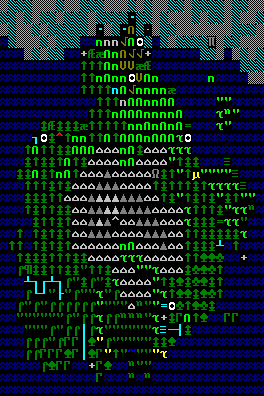
It was for similar reasons that when cats were added to the game Dwarf Fortress, many died for no apparent reason. After investigation, this is what was happening: characters in taverns would throw down their beer mugs when called to battle, and cats walking through taverns would end up with their paws covered in alcohol. Dwarf Fortress likes to take simulation to the extreme, and it turns out that cats clean themselves by licking themselves, absorbing any substance that was on them. The cats soaked in alcohol absorbed the alcohol and died. It's a sad story (the game has since been modified), but nonetheless incredible.
The emergence
The concept of emergence in video games is a complex subject that deserves an article of its own. Emergence occurs when players adapt a game to suit their own preferences, using game elements to create their own experience with the game.
Speedrunning, for example, is the art of finishing a game as quickly as possible, regardless of the game's objectives. Similarly, certain techniques were not intended when the game was designed but have been adopted by players, such as rocket jumping in the Quake series, which involves firing a rocket at your feet while jumping to gain a propulsion bonus.
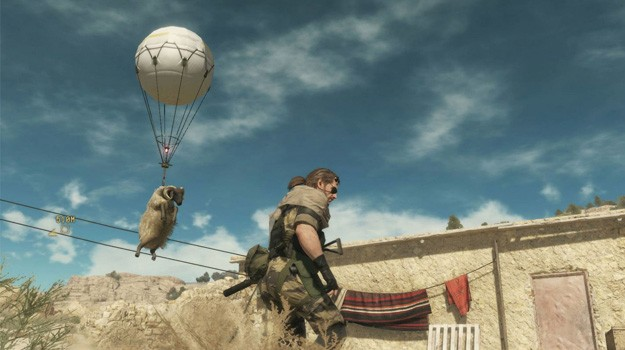
But for systemic games, emergence is a goal sought by game developers. All the elements are there to create more or less unexpected situations, while leaving the player enough freedom to experiment with the different systems. In Metal Gear Solid V, for example, you can stick an explosive on your own vehicle, drive at full speed towards an enemy base, and jump out of the vehicle well before impact.
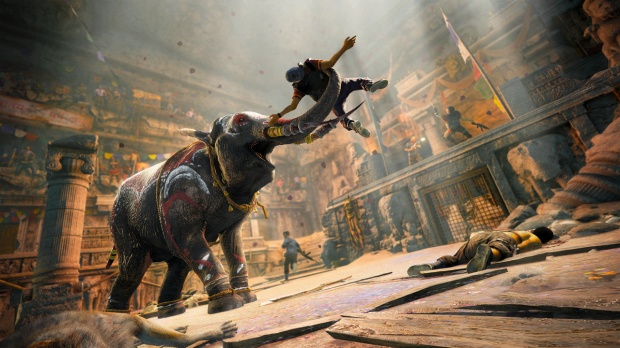
This type of emergence also forces the player to adapt to an unexpected situation, for example, to use it to their advantage. In the FarCry series, not only do enemies attack you, and wild animals attack you, but wild animals also attack your enemies. You are free to flee the battle and let a tiger or elephant take care of some of your enemies.
Planning and choosing the resolution
Finally, the emergence brought about by systemic games allows players to plan a sequence of actions. If each element always reacts in the same way, this allows players to create a strategy.
In The Legend of Zelda: Breath of the Wild, attacking a chicken is rarely a good idea. If you do, a flock of chickens will ferociously attack you, leading you to certain death. However, if a monster seems difficult to kill, you can lure it in and make it attack a chicken. The chickens will then defend their honor, destroying the monster for you.
Similarly, it is sometimes better to wait until nighttime in Metal Gear Solid V, because you know that some guards will be asleep and it will be easier to take care of them. This is why systemic games need consistency, because players need to be able to predict what might happen in order to create a strategy that combines different systems.
Conclusion
Systemic games have been around for a long time. For example, since the early 1990s, there has been a category of games known as "immersive sims," which emphasize player freedom of choice and emergent gameplay. But nowadays, emergence and systemic aspects no longer constitute a category of games, but are now part of the gameplay building blocks that can be included in any type of game. That's why The Legend of Zelda: Breath of the Wild, for example, allows you to solve puzzles any way you want, in any order you want. What's more, with the constant improvement of artificial intelligence in games, unexpected scenarios are becoming increasingly common, allowing players to adapt on the fly and use their knowledge of each system to their advantage. Systemic games have a bright future ahead of them.
Resources
Rules of Play: Game Design Fundamentals - Eric Zimmerman and Katie Salen
The game within the game: emergent gameplay
The Rise of the Systemic Game | Game Maker's Toolkit
Helping It All Emerge: Managing Crowd AI in Watch Dogs 2
Why Dwarf Fortress started killing cats - Here's A Thing
A Thousand Tiny Tales: Emergent Storytelling in Slime Rancher
The Definition of [Artificial] Insanity | The Systemic AI of Far Cry
