
By Virginie Dotta - Technical Director, Virtual Infrastructure SQUAD
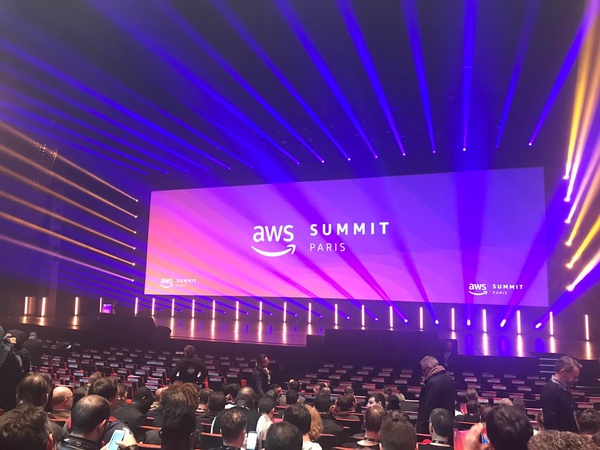
It is undoubtedly one of the must-attend events for professionals and experts in the cloud industry: the AWS Summit was held on April 2 at the Palais des Congrès in Paris.
A look back at the keynote address
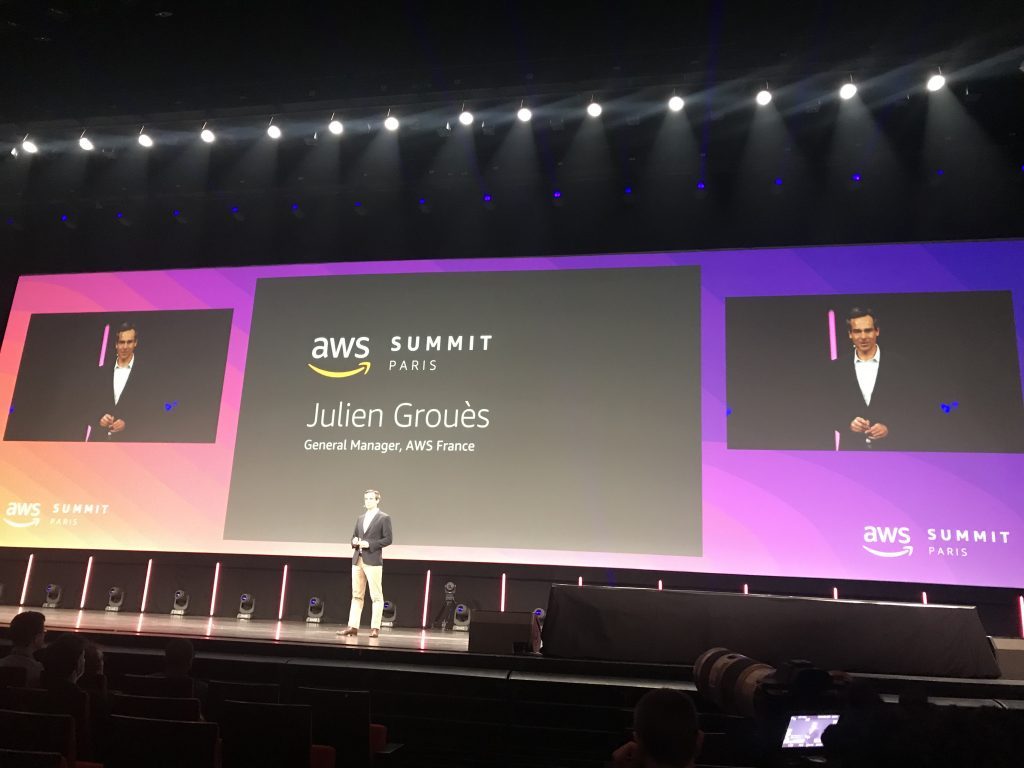
Among the many topics covered, the 2019 edition focuses onmachine learning, artificial intelligence, serverless architectures, analytics, and Blockchain as a Service. Julien Groués, General Manager of AWS France, and Adrian Cockcroft, VP of Cloud Architecture Strategy, highlighted many new developments, demonstrating once again the power of the giant in the field of public cloud computing.
Global presence, overwhelming
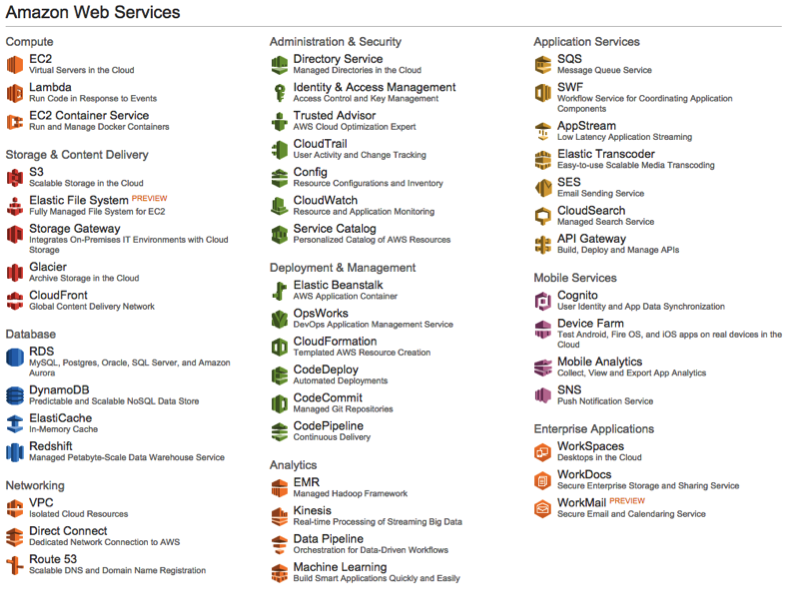
Using numerous figures, Adrian Cockcroft highlighted the many developments in the AWS catalog, which now includes 165 services, representing some 1,950 new features in 2018. It should be noted that the first service, Amazon S3 (link to the service), was launched in 2006.
Julien Groues, meanwhile, focuses on France and the tens of thousands of customers in various sectors, including banking, automotive, telecommunications, rail, and energy, who now all want to migrate some of their services to the cloud.
AWS opened a France Region in 2017, with three availability zones, five edge locations (including one in Marseille), and a branch office in Lyon. Why three zones? To significantly reduce the risk of a single event affecting availability, but close enough to ensure continuity for applications that require rapid recovery in the event of an incident.
And as if that weren't enough,Adrian Cockcroftadds to this by highlighting AWS's reputation and the group's presence across 20 regions located almost all over the world, with four new regions soon to be added in Cape Town, Bahrain, Milan, and Hong Kong.

A catalog and marketplace that grows year after year
It is through the various fields that we are familiar with and address when talking about IT that Adrian Cockcroft highlights an extremely comprehensive catalog of services. More than a dozen database services, 116 cybersecurity services, governance management tools, 190 types of instances for specific use cases, and, above all, services that facilitate and accelerate migration to AWS.
So we wonder how they do it. Who is the genius, brimming with ideas, behind all these developments that continue to grow year after year? The answer is simple... THE CUSTOMER. The customer themselves, who, despite their constraints and the complexity of some of their architectures, want to adopt this new mode of consumption and provision of IT resources, are driving things forward.
AWS feeds off these needs and, as demand grows, creates new models and services that enable other customers to innovate and move forward continuously.
Micro services that are transforming the IT landscape
And they are not to be outdone. On the infrastructure side, transformations have been underway for many years now, with a shift from monolithic systems to microservices architectures, and AWS offers its customers an impressive range of services based on instances as well as containers.
There is Amazon Elastic Container Service (Amazon ECS) for orchestration, andAmazon Fargate, a compute engine designed for Amazon ECS that allows containers to run without having to manage servers or clusters. Adrian Cockcroft, like all the speakers, repeatedly emphasizes that "the goal is for customers to be able to refocus on their core business by freeing themselves from underlying layers and hardware," and this is apparently what many customers are doing, choosing services such as Amazon Elastic Container Service for Kubernetes (Amazon EKS), launched in 2017, on which the largest customer deployments are carried out.
Numerous feedback reports
During this keynote, numerous testimonials from the American giant's customers are presented by the customers themselves, demonstrating how Amazon enables them to evolve in order to continue innovating while remaining focused on their own businesses.
Euler Hermes, the global leader in credit insurance solutions, represented by its CIO,Antoine Larmanjat, has successfully transformed its IT infrastructure with the help of Amazon.
"Basically, there are a lot of transaction constraints, around 600,000 per month, with major players in the sector requesting the use of APIs that allow for greater agility and resilience," emphasizes the CIO.
The company therefore decided to restructure its architecture based on four principles: the development of APIs, ensuring integration as far as possible into customers' information systems; microservices, breaking down outdated monolithic models; the cloud; and data analytics, responding to the challenges of machine learning.
It also represents a cultural transformation with the adoption of the cloud, greater agility, and the DevOps vision, which today encapsulates the transition to a programmed infrastructure (infrastructure-as-code), an automated chain integrating a development and deployment factory, and a known cost of ownership at all times.
For Euler Hermes, this means being able to onboard new customers much more easily and quickly in order to offer them innovative and robust services.
To watch the entire keynote speech, clickhere.
