The rapidly changing IT landscape requires flexible and powerful solutions for infrastructure management.
Azure Stack HCI, an innovative offering from Microsoft, is emerging as a relevant response to the growing needs of businesses for effective IT resource management.
What is Azure Stack HCI?
Azure Stack HCI is ahyperconvergedserver solution designed to enable businesses to manage their IT infrastructure more efficiently and flexibly.
A "hyperconverged" server is a system in which traditional hardware components, such asservers,storage, andnetworking, are combined into a single enclosure. This approach simplifies management and reduces costs while offering high scalability. In short, Azure Stack HCI is an operating system that miniaturizes the Azure Cloud and makes it available on your local infrastructure.
Difference between a "traditional" server and a "hyperconverged" server
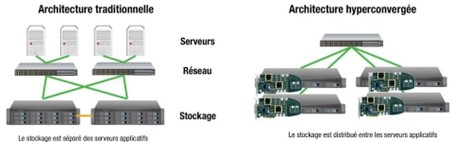
Image source:Hyperconvergence or Hyperconverged Infrastructure (weodeo.com)
Hyperconverged servers offer a more integrated and simplified approach to infrastructure, while traditional servers follow a more conventional approach with separate management of components.
Services in Azure Stack HCI
Azure Stack HCI offers a variety of services and features, including:
- Advanced virtualization : With Hyper-V, Microsoft's virtualization solution, you can run multiple virtual machines on a single server, providing great flexibility for deploying and managing your applications.
- Software-defined storage : Azure Stack HCI offers software-defined storage, which allows you to manage storage more efficiently and flexibly. You can also use local hard drives, SSDs, and external storage devices.
- Centralized management : You can manage your Azure Stack HCI infrastructure from the Azure portal, making it easy to manage, monitor, and maintain your hyperconverged servers.
- High availability : Azure Stack HCI is designed to ensure high availability for your applications through built-in replication and redundancy.
- Advanced security : You can benefit from Microsoft's cutting-edge security features to protect your data and applications.
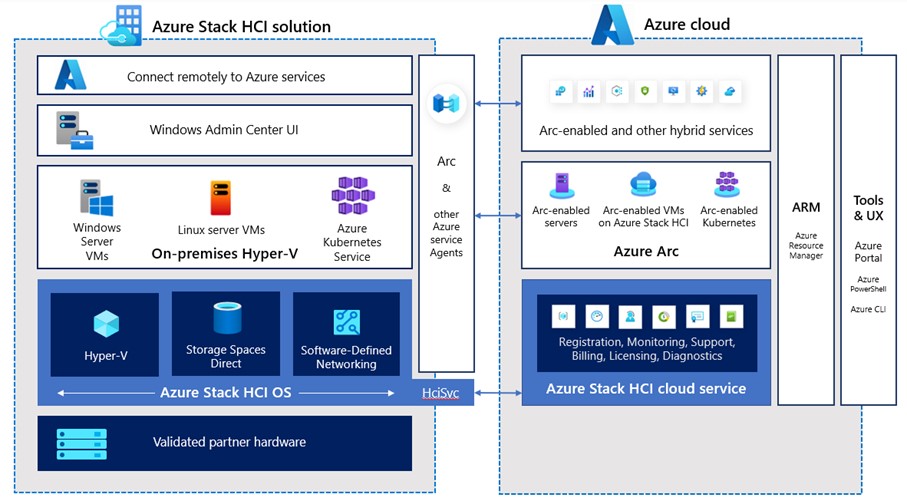
Image source: Hybrid capabilities with Azure services - Azure Stack HCI | Microsoft Learn
Benefits of Azure Stack HCI
Azure Stack HCI offers numerous advantages:
- Scalability : You can add new hardware resources as your business grows, without disrupting existing operations.
- Flexibility : You have control over computing, storage, and network resources, allowing you to customize your infrastructure to meet the specific needs of your business.
- Reduced costs : By consolidating your hardware resources and using defined software, you can reduce infrastructure costs and improve profitability.
- Integration with Azure : You can extend your on-premises infrastructure to the cloud using Azure services, providing greater flexibility for hybrid workloads.
Azure Stack HCI pricing
The cost of Azure Stack HCI varies depending on several factors, including storage capacity, computing power, and your organization's virtualization needs. You will need to consider the cost of software licenses, hardware, and support and maintenance services. Microsoft offers a variety of licensing options, including pay-as-you-go models to meet different budgetary needs.
Conclusion
In conclusion, Azure Stack HCI is a powerful,flexible, andscalablehyperconvergedserver solution that offers numerous benefits for businesses looking to optimize their IT infrastructure.
In a future article, we will take a look at how Azure interacts with Azure Stack HCI infrastructure.
To go further... Azure Stack vs. OpenStack
In summary, Azure Stack HCI is geared toward tight integration with the Azure ecosystem, offering a turnkey solution with increased ease of use for Microsoft users, while OpenStack offers great flexibility and deep customization, but often requires more advanced technical expertise for setup and maintenance. The choice depends on specific requirements in terms of functionality, integration, and control of the cloud infrastructure.
Nicolas VACCARO
Cloud Engineer